How to Handle CDs and Cassettes Without Causing Damage
Physical media needs proper care to last. Here's what actually damages CDs and cassettes, and how to handle both correctly.

Why Physical Media Still Needs Your Attention
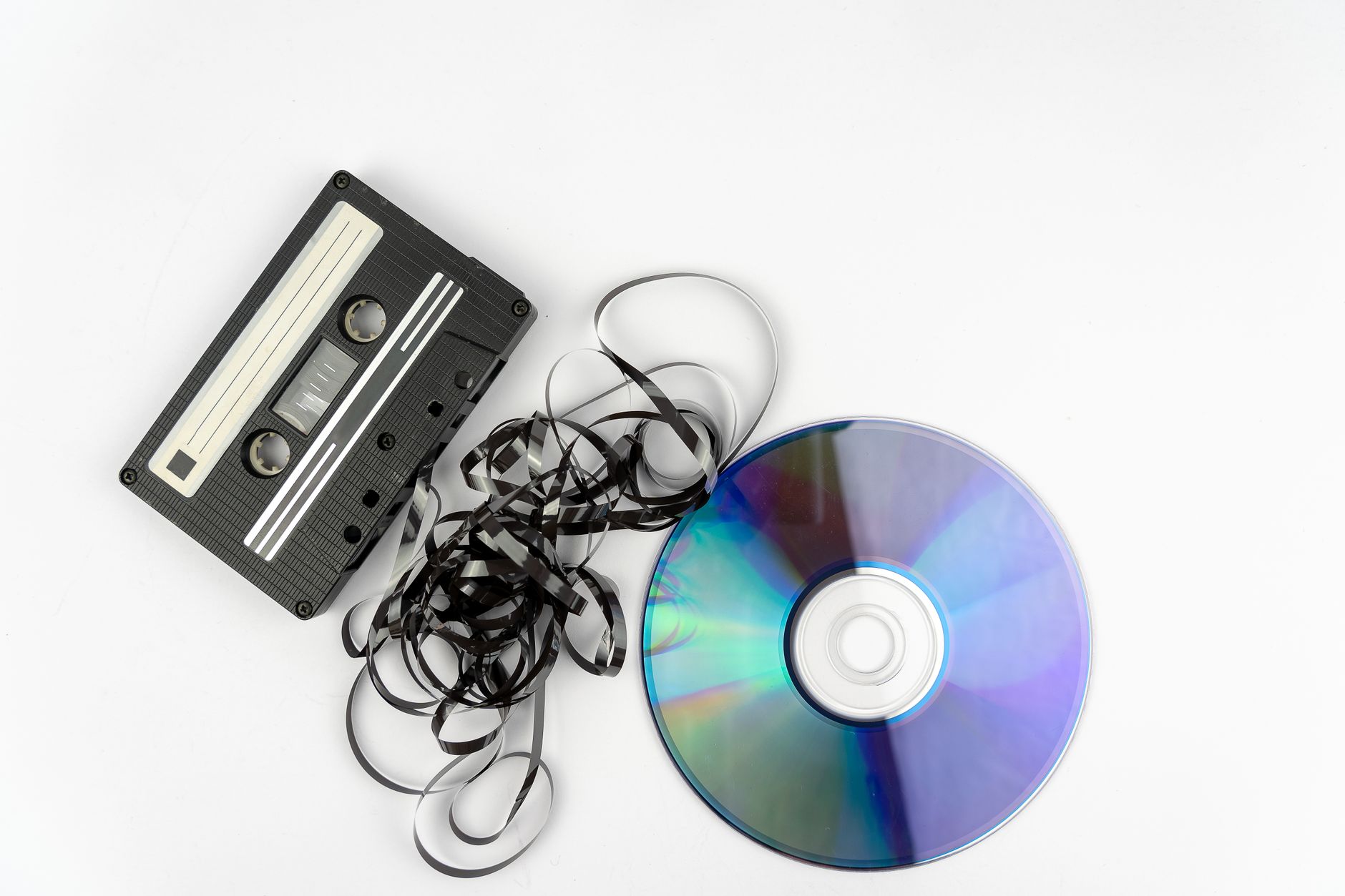
Vinyl gets most of the care-and-handling attention in collecting circles, but CDs and cassettes sit in plenty of collections too - and both formats are more vulnerable to mishandling than most people assume. A scratched disc or a stretched tape doesn’t have to mean a lost recording. Most damage comes from a handful of habits that are easy to break once you understand what you’re actually protecting.
This guide focuses on the physical handling of compact discs and compact cassettes, the formats that dominated the 1980s and much of the 1990s. If your collection spans that era - whether you’re holding onto original pressings, tracking down specific releases, or simply keeping functional copies of albums you love - the basics below apply directly.
How CDs Are Actually Constructed
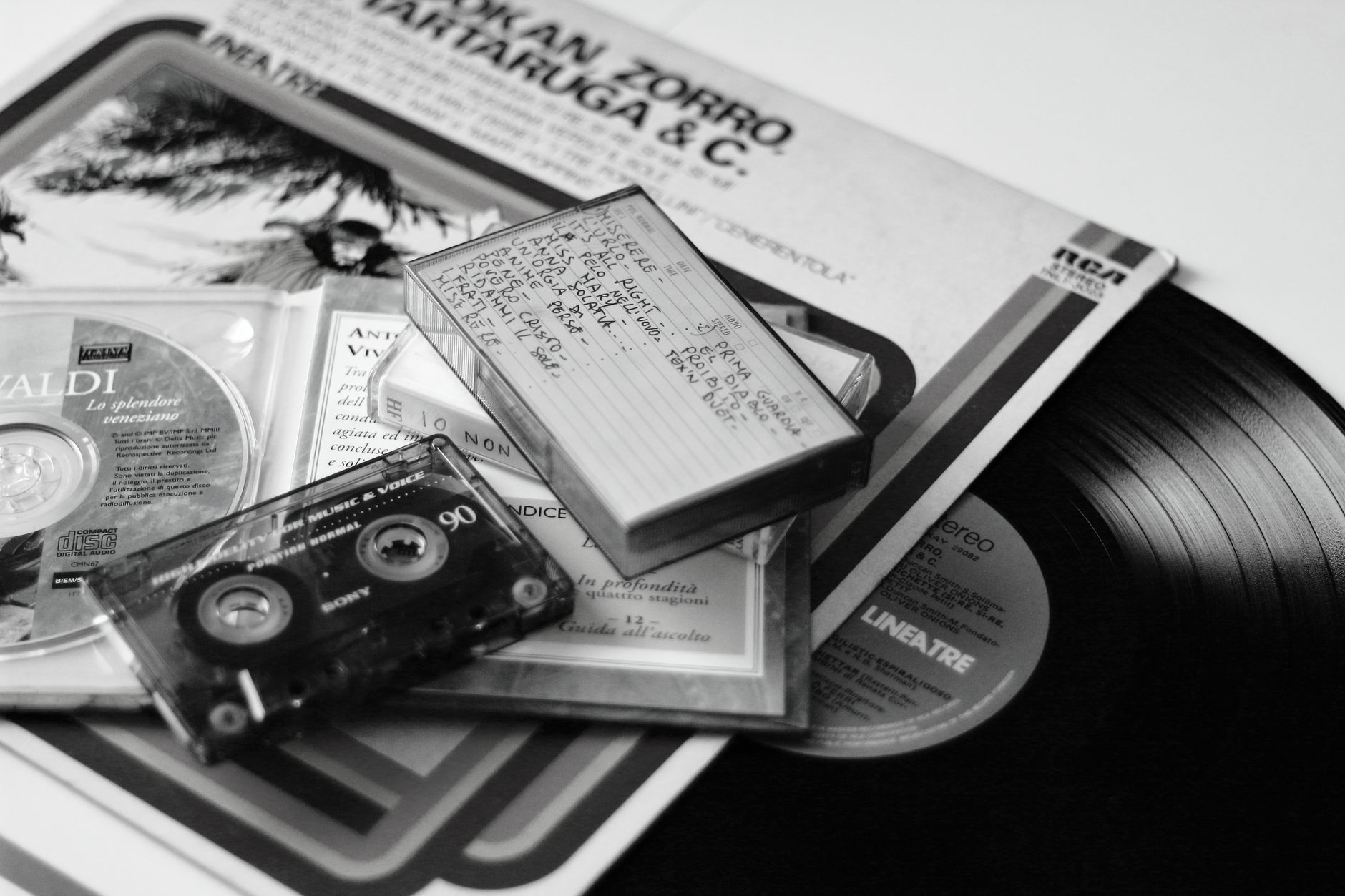
Understanding a CD’s structure makes the handling rules make sense rather than feel arbitrary. A standard compact disc is a polycarbonate disc with a very thin layer of reflective aluminum (or occasionally gold, on archival pressings) bonded to it. A lacquer coating sits on top of that metal layer. The data is read from the label side through the plastic, which means the laser reads up through the bottom of the disc.
The label side is actually the more vulnerable side. The lacquer there is thin, and a hard scratch on the label surface can reach the aluminum layer and destroy data permanently. The bottom (clear) side is thicker polycarbonate, and while scratches there scatter the laser and cause read errors, they are often repairable with disc resurfacing. Scratches on the label side usually are not.
Handle a CD by its outer edge and the center hole only. Keep fingers off both flat surfaces. If you need to set a disc down without a case, place it label-side up on a clean, soft surface - never label-side down on anything that could abrade it.
Cleaning CDs Correctly

Dust and fingerprints cause most playback problems on CDs. The cleaning method matters more than people expect. Always wipe from the center hole straight out to the outer edge - radially, not in a circular motion. Circular wiping follows the direction of the data tracks, meaning a circular scratch crosses more data. A radial scratch runs roughly parallel to the direction the error-correction system is designed to handle.
Use a soft, lint-free cloth - microfiber works well. For fingerprints or smudges that don’t lift dry, a small amount of water or isopropyl alcohol (90% or higher) on the cloth is generally safe. Avoid household glass cleaners, which can contain ammonia and may affect the lacquer on the label side over time.
Never use paper towels, tissues, or shirt fabric. All of these are abrasive enough to leave fine scratches in polycarbonate.
Storage for CDs
Keep discs in their cases. Jewel cases exist precisely to protect the playing surface, and a disc rattling loose in a box or bag is accumulating micro-scratches every time it moves. If jewel cases are cracked or broken, replacement cases are inexpensive and widely available.
Store cases vertically, like books on a shelf. Horizontal stacking puts pressure on the cases and, over time, on the discs inside. Avoid locations with direct sunlight or significant temperature swings. Prolonged UV exposure can degrade both the polycarbonate and the dye layers in recordable CDs (CD-Rs), which are considerably less stable than pressed commercial discs.
On the subject of CD-Rs: if your collection includes home-burned copies or archival recordings on CD-R, treat those with extra care. The organic dye layer used in recordable discs degrades faster than the aluminum layer in a pressed disc, particularly in high-humidity environments.
Cassette Tape: What Goes Wrong and Why
Compact cassettes are a magnetic medium. The audio signal is stored as a pattern of magnetic particles on a thin polyester tape wound inside a plastic shell. Several things can damage or degrade that recording: physical stretching, print-through from adjacent tape layers, shed oxide, and exposure to magnetic fields.
The most common physical problem is a stretched or wrinkled tape, usually caused by a mechanism that takes up tape unevenly - either a failing player or a cassette that wasn’t fully rewound before sitting in storage. A stretched tape produces a warbling, wavering playback sound that is sometimes mistaken for a recording problem. In many cases the tape is otherwise intact; the stretch is the issue, and it is not reversible.
Before playing any cassette that has been sitting in storage for years, inspect it visually. Hold it up to a light source and look through the clear window at the tape pack. The tape should be wound evenly and tightly. Loose, uneven winding suggests the tape may have partially unwound inside the shell, which increases the risk of a jam in the player. Use a pencil or purpose-made tape tool inserted into one of the spools to take up any slack before pressing play.
Handling Cassettes Physically
Never touch the tape itself. The oils from skin can cause the oxide to shed or the tape to stick to the heads and guides in a player. Hold cassettes by the shell only.
If a cassette does unspool inside the player - a relatively common failure with older mechanisms - don’t force the tape. Eject carefully, take up the excess slack by hand-winding it back into the shell slowly, and check the tape surface for creases before playing again.
Keep cassettes away from speakers, amplifiers, and other magnetic sources. A strong magnetic field can partially erase or corrupt the recorded signal. This was well understood when cassettes were the primary format, but it’s easy to forget when a tape is sitting on a shelf next to modern electronics.
Storage for Cassettes
Store cassettes in their cases, upright (on their long edge, spines out), in a stable environment. Heat is particularly damaging - a car dashboard in summer can reach temperatures that soften the shell, warp the tape, or cause the layers to stick together. The inside of a car is one of the worst places to store cassettes long-term, despite being where many people kept them during the format’s heyday.
Rewind cassettes to the beginning or end before long-term storage rather than leaving them mid-tape. A tape resting mid-way puts uneven tension on the pack, which can cause deformation over years.
For cassettes with recordings of real value - original releases, out-of-print albums, or live recordings that don’t exist elsewhere - consider transferring the audio digitally as a backup. Tape has a finite lifespan, and the mechanisms in aging cassette players can be just as much a risk to the tape as storage conditions.
The Common Thread
Both formats reward the same basic approach: keep them in their cases, keep them clean, keep fingers off the media surface, and store them in stable conditions away from heat, light, and magnetic sources. Neither CD nor cassette is as fragile as some collectors assume, but neither is as tough as they were marketed to be at the time. The copies that survive in excellent condition forty years later are usually the ones that were handled carefully from the start.